Italiano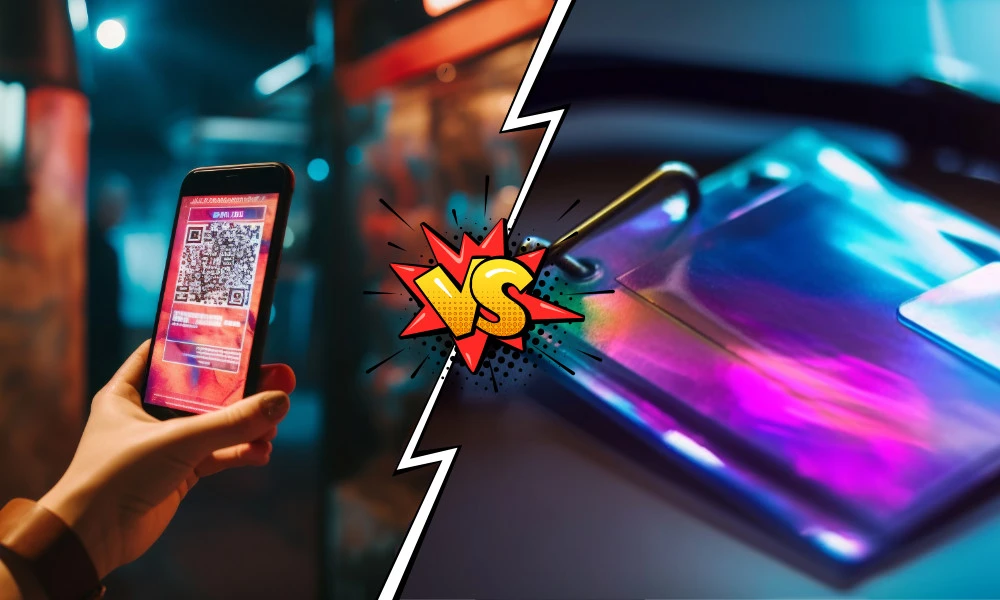
Close your eyes and picture an event: you probably see an attendee with a badge hanging from their neck. For decades it has been the symbol of belonging to a temporary community, whether a trade show, a conference or a company meeting: a pass, a tool for instant recognition and often an icebreaker.
Today, though, digital alternatives promise shorter queues, less waste and useful data. Does printing badges still make sense? The answer is not yes or no: it depends on the event. Let us look at the pros and limits of both routes.
Why printed badges still hold up
Printing badges is far from an outdated habit. In many settings it remains the most practical solution, for concrete reasons.
- Visibility and instant identification. A well-designed badge can be read from a distance: in a crowded setting like a trade show that is a big help for staff, security and networking.
- Visual segmentation. Different colors, graphics and formats tell exhibitors, visitors, press, VIPs and staff apart at a glance, and simplify access control to restricted areas.
- Branding and sponsors. The badge is a walking advertising space: a custom lanyard or a partner's logo gives continuous visibility throughout the event.
- Technological independence. No batteries, connection or compatible smartphone needed. It works for everyone, whatever their age or comfort with technology.
- Last-minute flexibility. With desk printers you can handle late registrations and data corrections on the spot, in seconds.
The limits of the physical badge
Alongside the advantages there are equally clear limits, especially when the printed badge is the only accreditation tool.
- Environmental impact. Thousands of PVC or laminated paper badges, used for a few hours and then thrown away, carry a real ecological cost. We cover it in Accredito digitale sostenibile: meno carta, più efficienza.
- Hidden costs. Beyond printing there are lanyards, badge holders and the staff for registration and distribution. Desk queues can delay the opening of the event: if that sounds familiar, read Code all'ingresso del tuo evento? 5 motivi per passare all'accredito digitale.
- Static information. A printed badge cannot be updated, sends no notifications and allows no interaction.
- No real-time data. How many people have come in? Which sessions drew the biggest crowds? Which booths generated interest? A piece of plastic cannot answer.
Digital alternatives: QR code, NFC and web app
To overcome these limits, digital check-in solutions have matured a great deal, changing the very idea of accreditation.
QR code: efficiency within reach of a smartphone
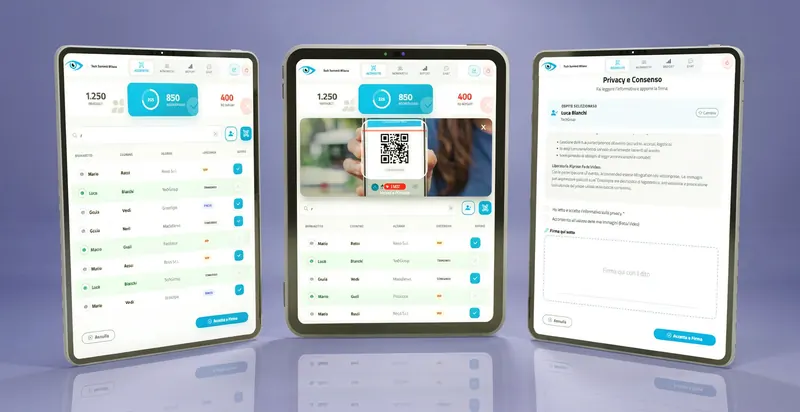
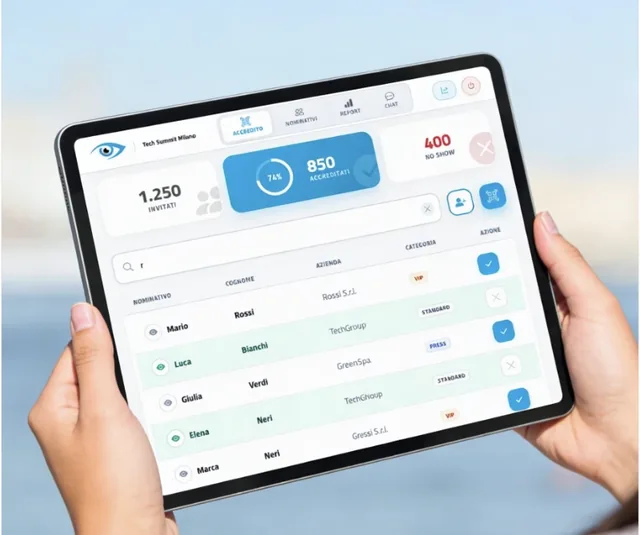
It is the most widespread alternative. The code is emailed at registration and can be saved on the attendee's smartphone or printed at home. At the entrance staff scan it with a smartphone or tablet: check-in is instant and attendance is recorded in real time. For a full guide, read Accredito QR code: come funziona e perché conviene.
- Speed. Sharply cuts waiting times.
- Costs. Removes printing and materials.
- Data. Gives precise statistics on entry times and attendance. A suite like goAhead lets you follow accreditation in real time, including by the end client; for QR code alone there is goAhead+.
- Contacts. It can be integrated with lead generation systems, so exhibitors collect a visitor's contact details, with consent.
NFC: one tap to connect
Near Field Communication is the technology behind contactless payments. Built into wristbands, cards or smartphones, it lets people check in, enter a restricted area or interact with a booth by holding the device near a reader.
- Experience. Very fast and intuitive.
- Interactivity. Makes digital scavenger hunts and point collection possible.
- Cashless payments. If linked to a payment system, attendees can buy food, drinks or merchandise with a tap.
- Worth considering. It needs dedicated readers and supports, so weigh it against the scale and budget of the event.
Event web app: the badge becomes a hub
The most complete solution is a dedicated web app, such as eventMe. Attendees log in from their smartphone with their credentials, without installing anything, and find their digital ticket with a QR code alongside many other features. The badge becomes just one of them.
- All in one. Agenda, maps, speaker profiles, documents, real-time polls and notifications for important communications.
- Advanced networking. Attendees browse the list of registrants, message each other privately and set up meetings.
- Engagement. Polls, live Q&A and feedback turn spectators into protagonists. Read more in App engagement eventi: come aumentare l'interazione live.
Physical or digital badge: how to choose
The choice is not between old and new, but between what fits your event best. Five factors help you decide.
| Factor | Printed badge works better | Digital solution works better |
|---|---|---|
| Type of audience | Audiences less used to technology; institutional or luxury events where the physical badge is a status symbol. | Young audiences comfortable with technology; innovation-focused events. |
| Duration and complexity | Short events (half a day), a single access point, few sessions. | Multi-day events with several rooms, workshops and real-time communication. |
| Networking goals | Visual identification is enough to break the ice. | You need a tool to search for specific profiles and set up meetings. |
| Budget and sustainability | A very tight budget and simple paper-based solutions. | You want to invest in experience and data, with sustainability in mind. |
| Need for data | Attendance data is not a priority. | Data analysis is needed to measure ROI and improve future editions. |
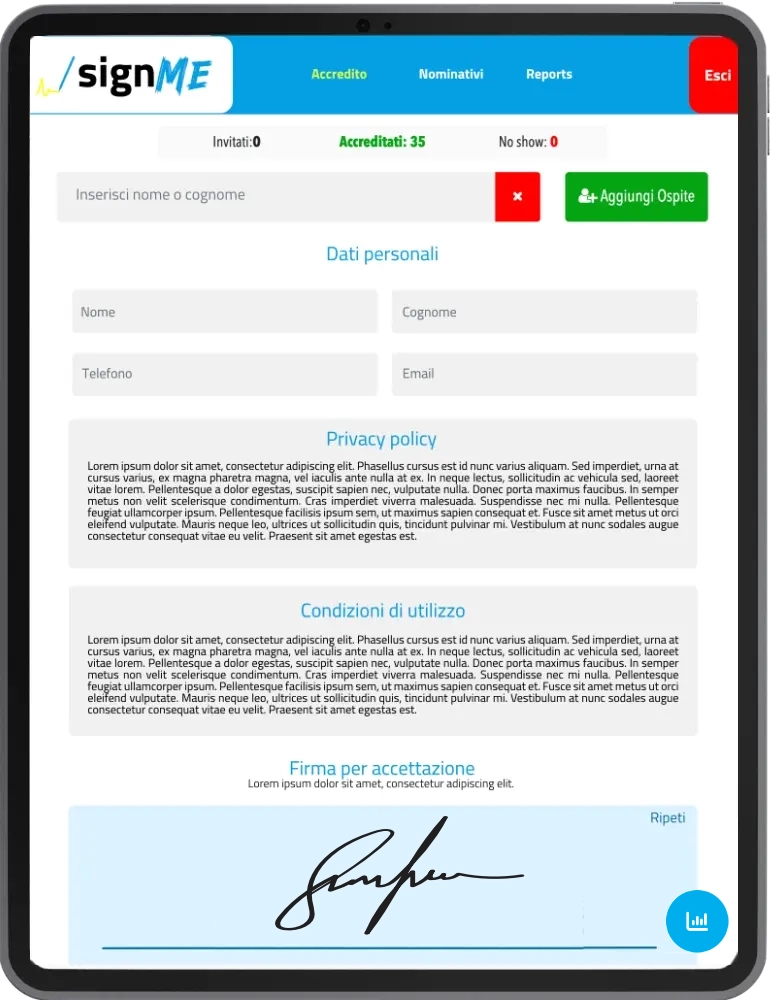
If you are also weighing how to register entries, read Check-in digitale: QR code, spunta o firma?.
The hybrid model and beyond the badge
In short. The physical badge helps people recognize each other; digital helps you manage, measure and interact. They do not exclude each other.
Often the best solution is a smart integration. A practical example in three steps:
- Digital check-in at the entrance. The attendee shows a QR code and is registered in seconds.
- Pick-up of the physical badge. Right after, they receive a quality badge, useful for visual identification and branding.
- Digital during the event. The QR code or the app is used for session access, lead generation and interaction.
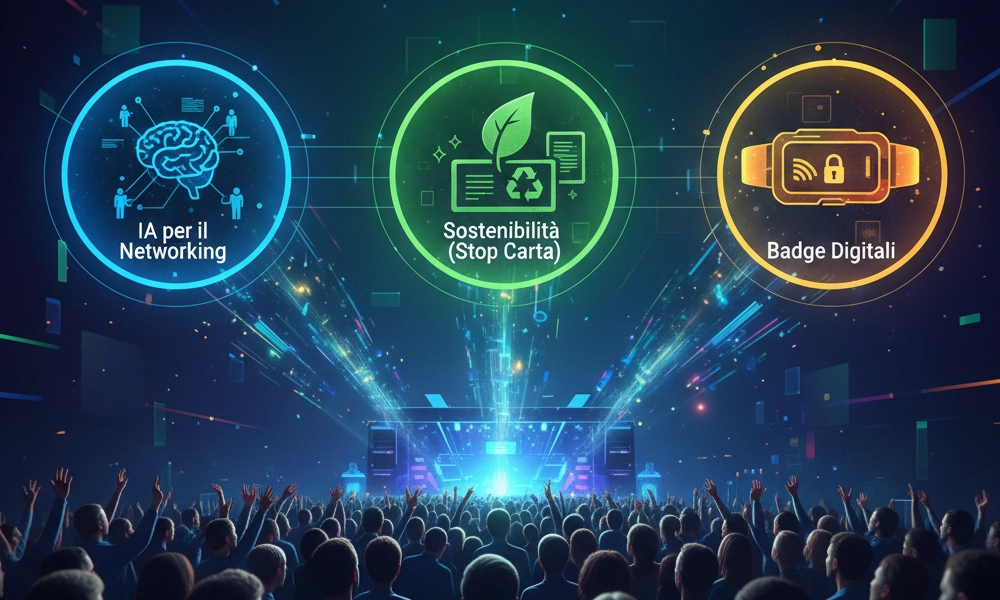
To dig deeper into combining physical and digital, read Eventi phygital: come unire fisico e digitale. To see where badges are heading, read Eventi 2026: IA, sostenibilità e badge digitali.
Beyond the badge: building connections
Whatever tool you choose, the goal stays the same: making it easier for people to meet. The badge, physical or digital, is only the starting point. The value lies in creating a setting that invites interaction: comfortable lounge areas, structured speed networking sessions, round tables and digital tools that break the ice before the handshake.
The traditional badge is not dead, especially when instant visibility and simplicity matter most. But ignoring digital alternatives means giving up operational efficiency, data and engagement. The best choice starts from an analysis of your event, your audience and your goals, with the attendee experience at the center.
Frequently asked questions
It depends on the event. Where visibility from a distance, audience segmentation and simplicity matter, it remains very useful. Where entry speed, data and interaction matter, it is worth pairing it with digital or replacing it. A QR code is scanned with a camera and needs no special hardware beyond the staff's smartphone. NFC needs dedicated readers and a compatible device, but offers an even faster interaction. Not necessarily. A good system also covers people who do not have their QR code with them, for example by searching their name at the desk and, if needed, printing a badge on site. With the visitor's explicit consent, after they are told which data is shared and why. Consent must be collected and recorded in line with data protection rules.Is the physical badge still necessary?
What is the difference between QR code and NFC?
Does digital check-in require everyone to have a smartphone?
How is privacy handled when exhibitors scan contacts?
Shorter queues, more time for your event
Picture an entrance with no queue, every guest recognized in seconds and attendance data updated while the event is running. With goAhead you manage guest accreditation, access control and attendance monitoring in real time. Tell us about your event and we will find the right solution together.
Discover goAhead