Italiano
Why accreditation matters more than it seems
Thinking that poorly managed accreditation only means a few extra minutes of waiting is a mistake. Check-in is the first physical contact between attendee and event: it comes after months of promotion and, if slow or confusing, it signals disorganisation before the programme even begins.
A guest who queues, cannot find their name on the list or receives the wrong badge starts with a negative impression, and that impression tends to colour the rest of the day. The costs are not only about image: your team spends time fixing duplicate registrations, missing data and unrecorded payments, hours that could go to hospitality.
Check-in is the first impression of your event: taking care of accreditation means taking care of every attendee's experience from the first minute.
The 5 most common accreditation mistakes
Recognising the obstacles is the first step to overcoming them. These are the five we meet most often.
1. Relying on manual processes and spreadsheets
A spreadsheet is where many start, but as registrations grow it becomes a bottleneck. We also covered this in Software segreteria: addio Excel, stop al caos (in Italian).
- Human error: a wrong copy-paste, a deleted formula or an overwritten value can lead to badges with wrong names or a registered guest left off the list.
- Out-of-sync versions: if several people work on the same file, on the event day the entrances may end up with different lists.
- Slowness: registering hundreds of people by hand, sending confirmations one by one and handling changes by email does not hold up as the event grows.
2. Communicating with attendees in a fragmented way
Accreditation is not just a pass: it is also a communication channel, and it often goes unused.
- Incomplete confirmations: if the map, times, contacts and parking directions are missing, dozens of emails and calls will follow.
- No reminders: people who register weeks ahead may forget the event. An automatic reminder helps them arrive prepared.
- Requests handled one by one: name changes and invoice requests by email take up a lot of staff time.
3. Access control not linked to registrations
Check-in is the real test. If the system that checks entry is not linked to the list of registered guests, problems are almost certain. If you have more than one entrance, also read Troppi varchi, troppe code? (in Italian).
- Queues and waiting: searching names on a paper list is the surest way to create lines at the door.
- No real-time data: how many people have come in? Who is already inside? Without a digital system it is hard to know, and you need this for both logistics and event management.
- Passes that are easier to duplicate: without a link to registrations it is harder to spot a pass used twice or one that is not valid.
4. Not using the data that accreditation produces
Every step of accreditation generates useful information that often goes unused.
- You do not know who really attends: which companies do people come from? This is valuable for sponsors, as we explain in Gestione sponsor eventi: come centralizzare e valorizzare (in Italian).
- You cannot measure results: without precise data on registrants, actual attendees and no-shows (registered people who do not turn up), you cannot tell how well your promotion campaigns worked.
- You plan future editions blind: knowing when people arrive and how they spread across entrances helps you organise better next time.
5. Having no plan B for the unexpected
What happens if the internet connection drops or a guest is not on the list?
- Total dependence on the network: if the system only works online, a connection problem can block entry. Ask your supplier whether an emergency mode exists and how data is synchronised when the connection returns.
- Special cases handled on the fly: without a clear procedure, such as a dedicated help desk, staff have to decide on the spot.
- Last-minute changes: telling all registrants about a programme change is hard without a tool that reaches contacts quickly.
How technology helps you avoid them
A modern accreditation platform acts like a conductor: it brings registrations, payments, communications and entry into one place, and automates repetitive steps.
- A single data archive: online registrations, payments and confirmations are linked, with no scattered files. For events with many registrations, a secretariat platform such as webRay® also centralises the organisational side.
- Simpler communication: personalised emails and SMS, automatic reminders and a page with all the information for attendees.
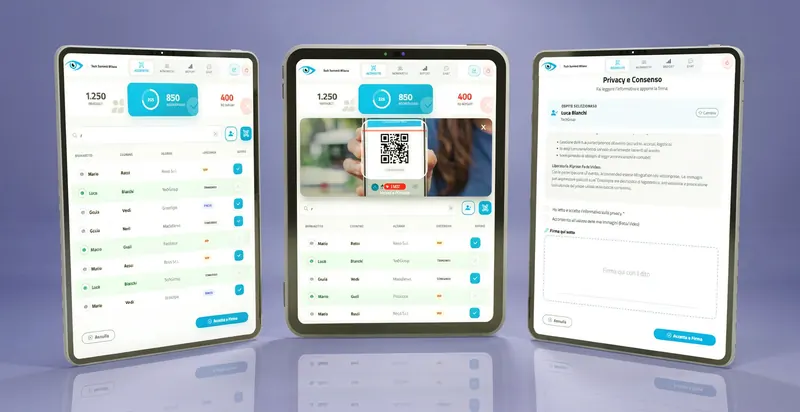
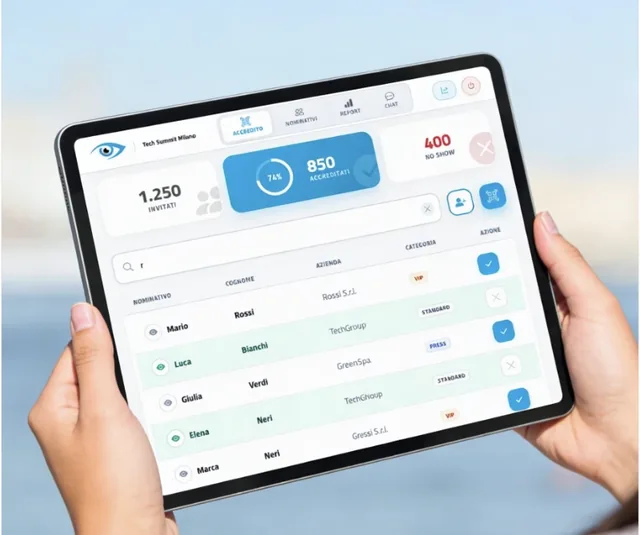
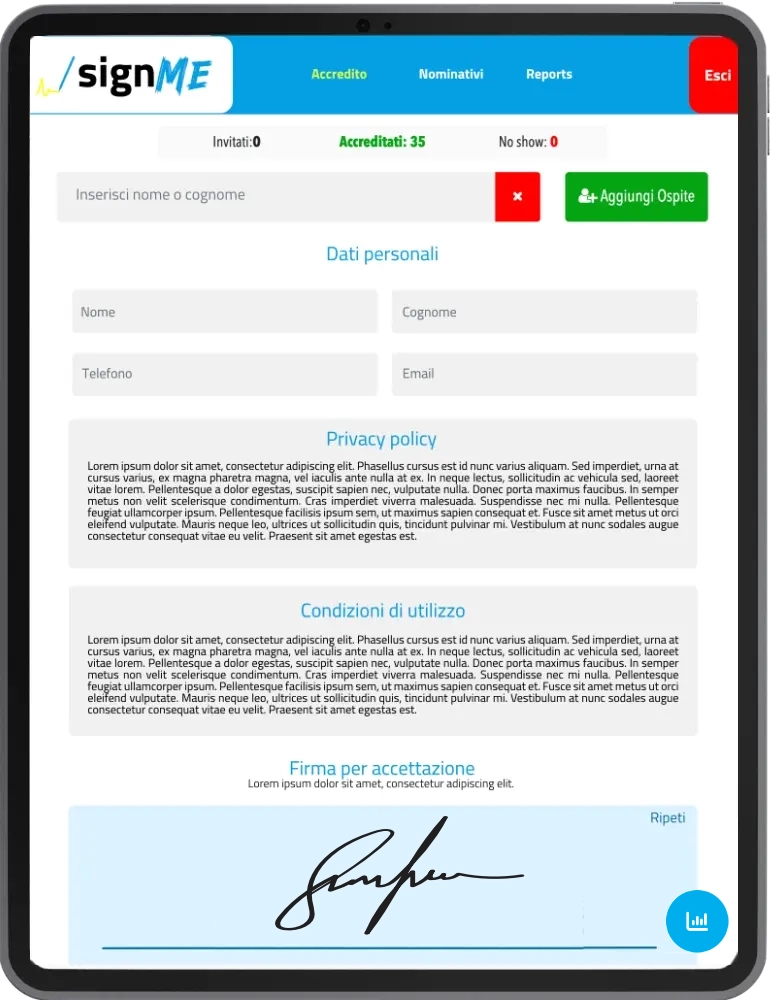
- Fast check-in: with QR code scanning from a smartphone or reader, or digital name tick-off, queues shrink and you see entries in real time. To choose the right method, read Check-in digitale: QR code, spunta o firma? (in Italian).
- Clear reports: dashboards showing registration trends, who is present and how the event is going.
To go deeper into the benefits of going digital, read Code all'ingresso del tuo evento? 5 motivi per passare all'accredito digitale and Software accredito eventi: le funzioni essenziali (both in Italian).
What to ask an accreditation system
Beyond check-in: the welcome
Accreditation management is not a simple administrative task: it is the first step in building the attendee experience. A smooth check-in welcomes guests the right way and frees staff from repetitive tasks, so they can focus on what matters: a smile, useful directions, timely help.
Choosing the right tool means putting the attendee at the centre and turning a possible point of friction into a chance to make a good impression.
Frequently asked questions
When registrants are numerous, you have more than one entrance or operator, there are payments or data to cross-check, or you notice the lists are never aligned. If you spend time fixing errors, that is already a good sign. It depends on the solution. Ask your supplier whether an emergency mode exists and how data is synchronised when the connection returns. A no-show is a registrant who does not turn up. Automatic reminders before the event and clear communication help reduce them, and attendance data lets you estimate them better for future editions. It depends on the type of event, the number of guests and the checks required. You can find a comparison in Check-in digitale: QR code, spunta o firma? (in Italian), and you can discuss it with our team.When is it worth moving from a spreadsheet to accreditation software?
Does digital check-in work without internet?
What is a no-show and how can it be reduced?
QR code, tick-off or signature: how do I choose?
Want check-in without queues and without stress?
Tell us about your event: we help you choose the most suitable accreditation system and manage entry in a simple, orderly way.
Discover event accreditation systems