Italiano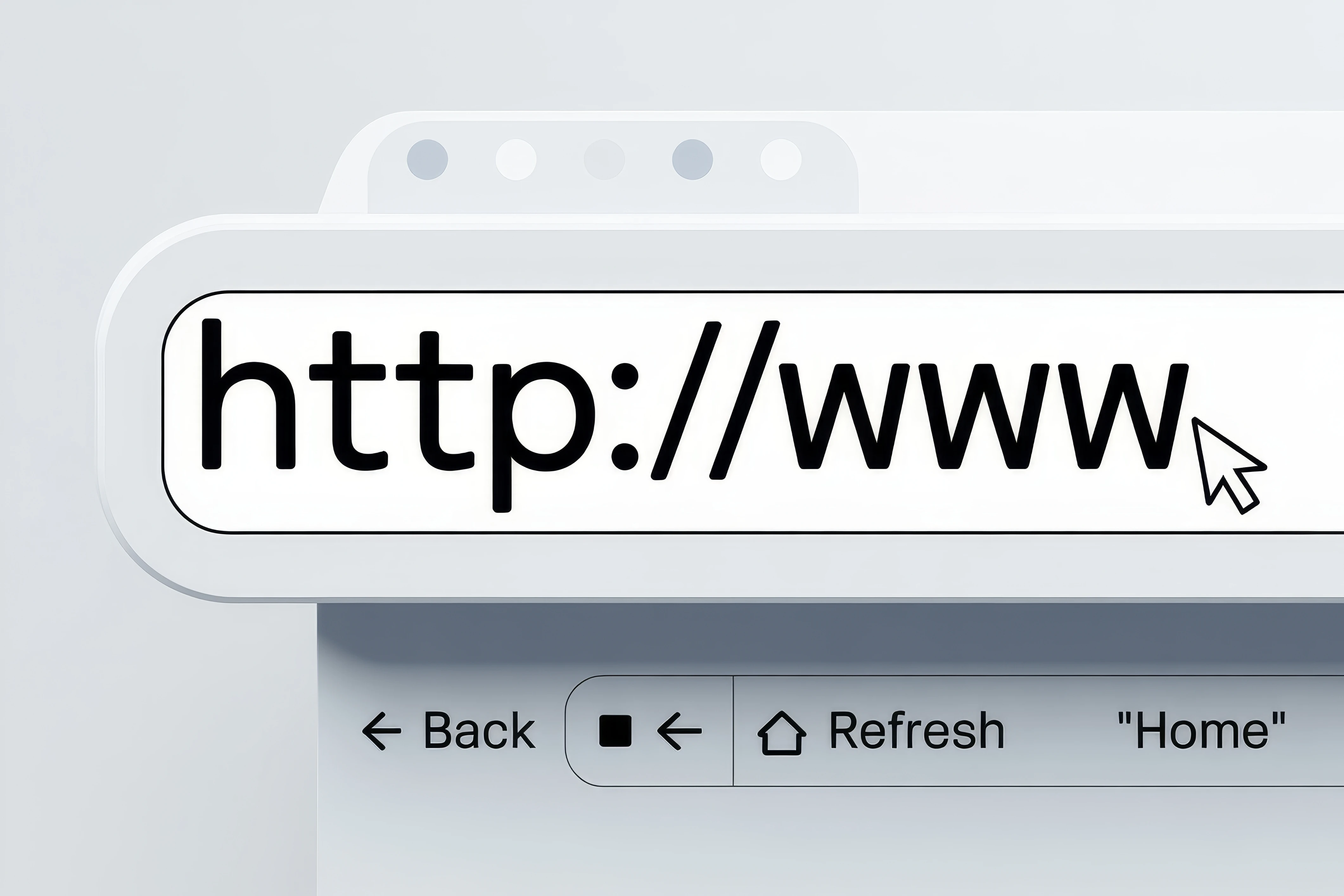
What a white-label event platform is
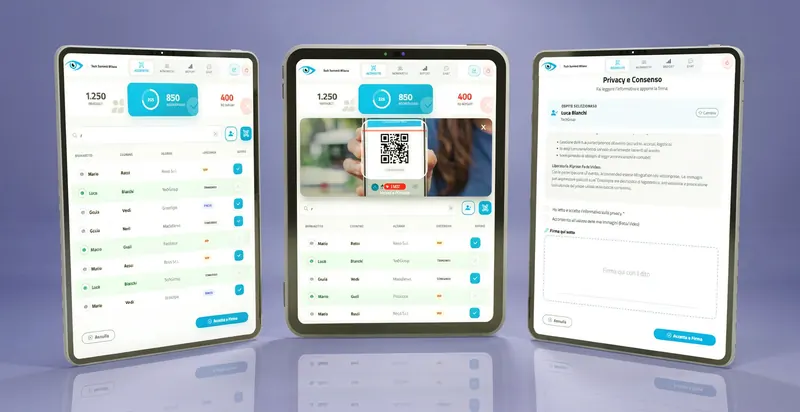
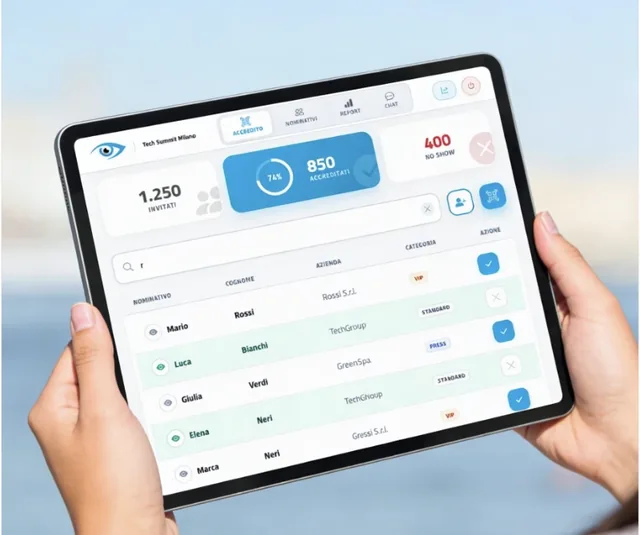
Imagine buying a high-quality product, removing the manufacturer's label and applying your own. That is white-label applied to software: a white-label event platform is a ready-made solution you can present as your own, without the supplier's brand (the classic "powered by").
In practice you can customise, within the limits the platform allows:
- Company logo and colours, for a consistent visual experience.
- A custom web address: for example events.yourname.com instead of platformname.com/yourevent.
- Look and organisation of the pages, adapting them to those who attend.
- Communication emails sent in your name, in your style.
It is not only aesthetics: it is the chance to give attendees an experience they recognise as yours, from registration to the event day.
White-label, standard and custom: three different things
- Standard platform: the same features for everyone and the supplier's brand clearly visible.
- White-label platform: a ready-made platform that carries your brand. It goes live faster, but features stay those of the product.
- Custom platform: designed around your processes. It is the most flexible, but takes more time and budget: see the page on custom event platforms (in Italian).
Why a standard platform may not be enough
Standard platforms work, but they have a limit for anyone who cares about their image: your brand gets diluted. When guests register or log in from an interface that does not carry your name, attention is split and your organisation risks looking like "one of many clients" of that service.
Think of a very common situation: you have invested time and budget to bring people to your event. They click your invitation and the first thing they see is another company's logo. It is a small gap, but it can suggest less care for detail, especially to attendees and sponsors who do not know you well.
The benefits of a platform with your own brand
1. A more recognisable identity
A brand presented consistently at every touchpoint makes the event more recognisable and trustworthy in the eyes of attendees. A platform with your own brand extends that consistency to registration, access and communications, without interruptions.
2. More trust and professionalism
Presenting yourself with a platform that looks like yours conveys solidity and care. Think of a company organising a closed meeting for investors: it will need an environment that reflects the seriousness of its brand, not a generic space.
3. An experience better suited to your audience
Every audience has different habits. With a customisable platform you can highlight the most important sections and remove what is not needed, within the limits of the product. Clear paths lead to more engagement and fewer requests for help.
4. More room for sponsors and communication
Without third-party logos, the space is all yours and for those you want to showcase. You can give sponsors visibility with banners and dedicated spaces (we cover this in Gestione sponsor eventi: come centralizzare e valorizzare, in Italian), control the flow of emails and notifications, and promote your other services inside the platform.
5. An opportunity for agencies and consultants
If you are an agency or organiser, you can offer clients the platform as your own solution and provide a more complete service. Before doing so, check the licence and resale terms in your contract with the supplier. eventFusion, a white-label multi-event platform, is designed for this scenario (page in Italian).
How to customise it well
Having a customisable platform is only the first step: what matters is how you customise it.
- Define your brand guidelines: logo, colours, fonts and tone of voice applied consistently everywhere.
- Map the attendee journey: what must people be able to do straight away? Join sessions, see the agenda, network? Put that first.
- Write communications by hand: avoid default texts for emails, notifications and welcome messages and use your own tone.
- Use your own web address: it is a detail that strengthens trust. If emails are sent from your domain, though, they must be set up properly to avoid spam: read Le email del tuo evento finiscono in spam? Ecco perché (in Italian).
If you also need a site to present the event, read Il tuo evento vive solo sui social? Cosa ti manca senza un sito dedicato (in Italian).
Cost and return: how to assess them
A white-label solution may need a larger upfront budget than a standard platform. To assess it, also look at what a generic solution may cost you: brand recognition, room for sponsors and, for agencies, the chance to offer a service of their own.
The return, however, is not guaranteed: it depends on how many events you run, how much your brand matters to you and the product's customisation limits. To think it through more clearly, start from these questions:
Before choosing, ask yourself
Frequently asked questions
White-label is a ready-made platform with your brand: it goes live faster but features stay those of the product. A custom platform is designed around your processes: it is more flexible but takes more time and budget. Usually yes, if the platform allows it. Emails from your own domain need correct technical setup, otherwise they risk ending up in spam. Ask your supplier how this is handled. It depends on the product: logo, colours, address and communications are the most common points, while features and page structure may have limits. Ask your supplier for a clear list of what can be changed. It can be, because it lets you offer clients a solution under your own brand. Check licence and resale terms in the contract, and how client data is handled.What is the difference between white-label and a custom platform?
Can I use my own web address and emails?
How much can I customise a white-label platform?
Is a white-label platform suitable for agencies?
Want an event platform with your own brand?
Tell us about your events: we help you work out whether a white-label platform is the right choice and how to adapt it to your brand.
Discover eventFusion, the multi-event platform