Italiano
How many times have you heard that "content is king"? In the world of events, we might rephrase it as: engagement is king. An engaged attendee is a satisfied attendee — one who will remember your brand, share their positive experience, and come back for future editions. Ignoring engagement, on the other hand, means wasting an event's marketing, training and networking potential, cutting into the return on investment and letting your brand's message get lost in the noise.
Why engagement is the real measure of an event's success
Before looking at the tools, it's worth understanding why interaction matters so much. A high level of engagement isn't a cosmetic extra — it's a genuine performance indicator, with concrete, measurable benefits.
- Better content retention: people learn and remember more when they're actively involved, not just listening.
- Higher attendee satisfaction: a guest who can ask questions, share opinions and connect with others rates the experience far more positively.
- Valuable data and insight: live polls and Q&A don't just engage the audience — they give organizers concrete information about attendees' preferences and interests.
- Quality networking: facilitating connections between people is one of the main reasons people attend events, and good engagement creates the conditions for it to happen.
The 10 most requested tools for boosting interaction
Let's look at the technologies and strategies guests not only appreciate, but now expect to find at a modern event, whether in-person, virtual or hybrid.
1. Flexible platforms like eventMe
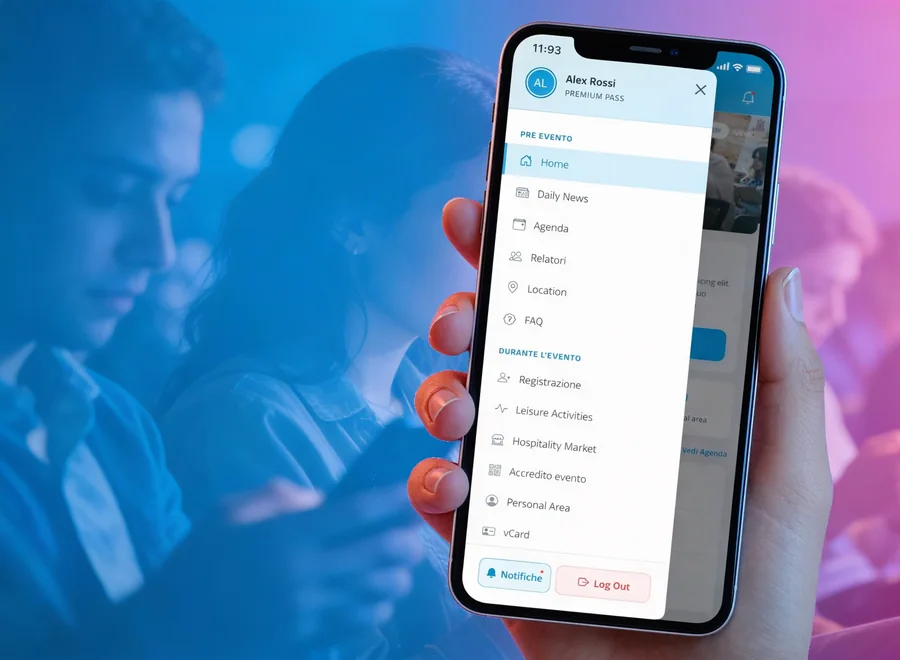
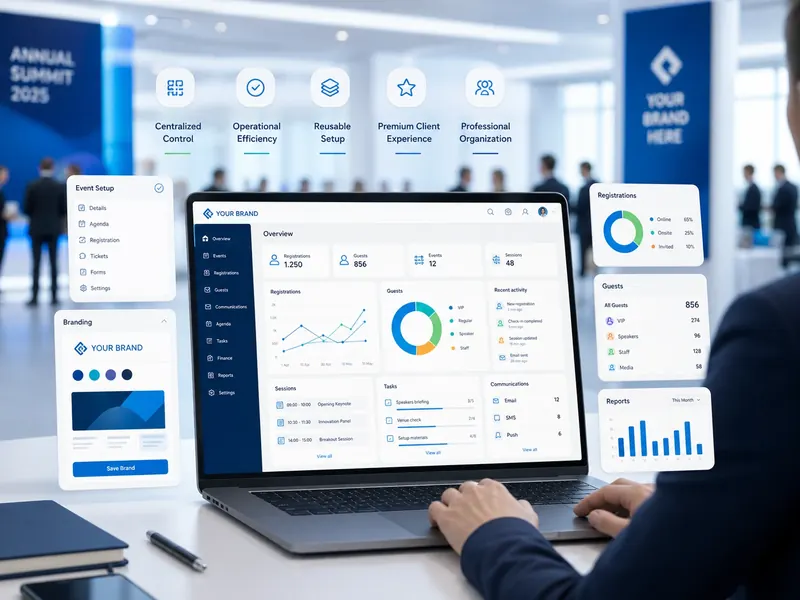
The central hub of every modern event is no longer just an app — it's a true engagement platform. While dedicated apps are great for centralizing information, more advanced solutions like eventMe take interaction to another level: thanks to customizable modules, they let you build a wide range of tailored engagement activities, turning the app from a simple information container into the event's true engine.
Practical example: with a platform like eventMe, an organizer can build an interactive agenda, a points-based game tied to visiting exhibitor booths, and a live Q&A session — all managed from a single interface, customized with the event's own branding.
2. Real-time polls and voting
Nothing breaks the monotony of a frontal presentation like a real-time poll. These tools let you ask the audience questions and instantly display the aggregated results on screen.
Practical example: a speaker asks, "Which of these strategies have you already implemented?" Attendees vote from their smartphones, and a chart updates in real time, showing the results and sparking discussion.
According to research from Markletic, over 81% of virtual event organizers use live polls to boost audience interaction — a figure also confirmed by data Markletic has published directly on its own industry blog.
3. Moderated Q&A sessions
Traditional microphone-based Q&A can be chaotic and intimidating for anyone who doesn't enjoy speaking up. Digital platforms let everyone submit questions from their own device, discreetly and in an organized way.
Practical example: during a panel, attendees submit questions through an app; others can upvote the ones they find most interesting, pushing them to the top of the list and ensuring the moderator answers the questions that matter most to the majority.
Tip: always make sure you have a dedicated moderator filtering and organizing incoming questions, to keep the session on schedule.
4. Gamification: the game that engages
Introducing game elements — points, leaderboards, badges — is one of the most effective strategies for driving active participation, turning key activities into an enjoyable competition.
Practical example: attendees earn points by scanning QR codes at exhibitor booths, answering themed quizzes and exchanging digital contacts; a live leaderboard projected in common areas shows the "top players," with final prizes for the winners.
Tip: prizes don't need to be expensive. Exclusive access or a brief meeting with a speaker can be more coveted than a gadget.
5. Networking and matchmaking tools
Many people attend an event primarily to build professional connections. Facilitating this process is an enormous added value, and often a critical success factor for the entire event.
Practical example: an app with AI-based matchmaking suggests a list of people with similar professional interests to each attendee; the user can then request a 15-minute meeting in a dedicated networking area.
6. Social walls and activity feeds
A social wall projects social media posts using the event's official hashtag onto one or more screens — an effective way to build a sense of community and amplify the event's online visibility.
Practical example: during coffee breaks, attendees see their own photos and comments appear on the big screen, feeling part of a bigger conversation — a natural incentive to keep posting.
Tip: always moderate the feed in real time, to avoid inappropriate content being displayed.
7. Interactive whiteboards and digital brainstorming
For workshops and collaborative sessions, digital brainstorming tools are essential, especially in hybrid settings where part of the audience is joining remotely.
Practical example: a moderator introduces a discussion topic, and all attendees — both in the room and remote — can add their own ideas on virtual sticky notes on a shared board, visible to everyone in real time.
8. Digital and AR photo booths
Going beyond the classic photo booth, digital versions offer animated GIFs, boomerangs and augmented reality filters customized with the event's logo.
Practical example: a guest takes a photo with an AR filter that overlays the event's logo; the photo is instantly emailed to them, ready to share on social media — generating authentic, guest-created content, which tends to achieve higher engagement rates than content published by the brand itself.
9. Hybrid and virtual event platforms
For events that aren't purely in-person, choosing the right platform is critical. The best solutions don't just stream a video — they recreate a genuinely interactive virtual environment.
Practical example: a remote attendee can "sit down" at a virtual networking table, visit interactive 3D booths, and take part in polls and Q&A exactly like someone attending in person.
According to a Bizzabo survey of more than 4,000 B2B event organizers, 68.9% of organizers believe event management software has a significant impact on the success of their events — confirming just how much choosing the right platform weighs on the final outcome, especially for hybrid or virtual formats.
10. Instant feedback systems
Understanding audience sentiment in real time is essential. Beyond classic polls, small terminals or in-app widgets let you gather quick, honest feedback session by session.
Practical example: at the end of each session, small kiosks are placed at the exit where attendees can tap a face icon (green, yellow, red) to rate how much they enjoyed it; the data is collected in aggregated, anonymous form.
Tip: gathering feedback throughout the event, not just at the end, lets you make corrections along the way instead of discovering problems too late.
How to choose the right combination
There's no magic formula that works for every event. Choosing the right tools depends on a few strategic factors.
If you're evaluating the underlying infrastructure for a hybrid or in-person event, our guide on how to choose an event organization platform can help, as can our deep dive on phygital events: blending physical and digital.
In conclusion, investing in engagement technology is no longer a luxury — it's a strategic necessity. Turning attendees from passive spectators into active protagonists is the key to creating events that leave a lasting impression and deliver a tangible return on investment.
Frequently asked questions
What are the most effective tools for boosting engagement at an event?
Does gamification work for B2B corporate events too?
How much does it cost to add engagement tools to an event?
Do engagement tools work for hybrid or virtual events too?
How do I choose the right combination of engagement tools?
Want your next event to be genuinely engaging?
eventMe is I.T.S. Planet's engagement web app: interactive agenda, networking, polls and Q&A in a single customizable platform, with no download required.
Discover eventMe