Italiano
1. Pre-event promotion and audience engagement
In the delicate phase of promoting and engaging attendees before the event, AI can support more targeted marketing strategies, analysing data to identify potential attendees and interact with them in a personalised way.
AI-powered chatbots and virtual assistants can answer potential attendees' questions and provide detailed event information, helping generate interest from the earliest stages.
For example, AI can analyse social media data to gauge interest around the event and suggest real-time adjustments to the marketing strategy to maximise attendance. This early engagement can significantly contribute to the event's overall success.
2. Advanced guest segmentation for tailored experiences
Thanks to machine learning, it's possible to build detailed guest profiles and segment the audience by thematic preferences, expected participation level, and past experiences. This makes it possible to optimise the on-site experience, suggesting personalised sessions or exclusive access.
83% of attendees say networking opportunities influence their decision to register for an event. AI-driven segmentation, applied to attendee matchmaking, is one of the most direct ways to meet that expectation. Source: Bizzabo, "2026 State of Events Benchmark Report".
3. Supporting the creative process
AI can support creative teams in developing naming, branding, graphic design, and scripts for promotional videos. With tools like DALL·E or ChatGPT, it's possible to create content quickly and at low cost while maintaining a good level of quality. It's worth testing several variants of taglines and visuals before making a final selection, to compare options objectively.
4. Planning and organising large events
AI-assisted planning analyses numerous variables to suggest optimal dates, locations consistent with geographic and logistical preferences, and weather forecasts integrated into the decision-making process.
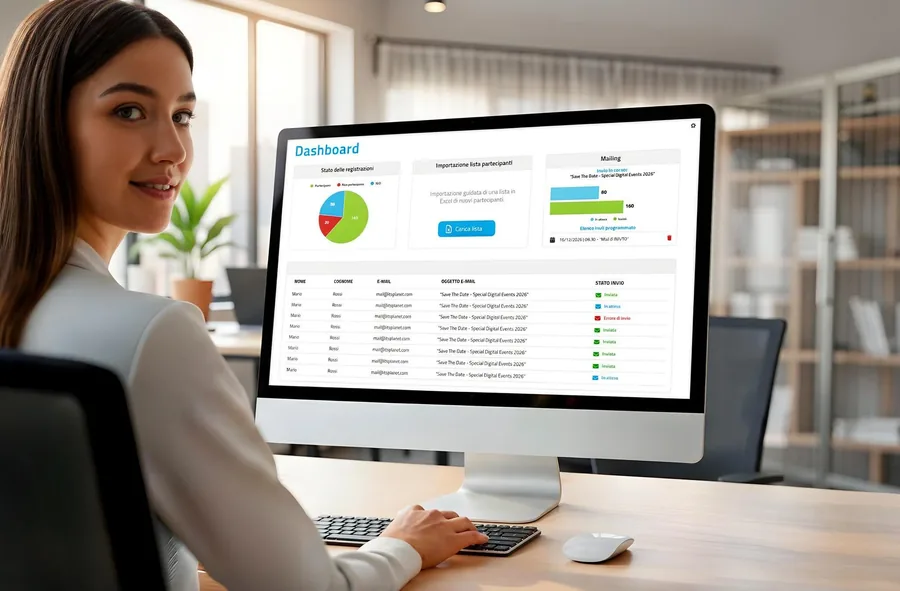
Another benefit is the automation of typical event secretariat tasks, such as sending confirmations, managing accreditation, and creating personalised badges. AI can generate optimised timelines and manage the flow of activities automatically, freeing up time for strategic and creative work.
A dedicated deep dive on this topic is available in our article on AI-powered event secretariat.
5. Managing logistical resources
During the event, artificial intelligence can monitor real-time attendance flows, resource availability and consumption, security, and emergency management. At large trade fairs and exhibitions, video analysis and sensor technology are increasingly used to optimise people flow and reduce bottlenecks at entrances.
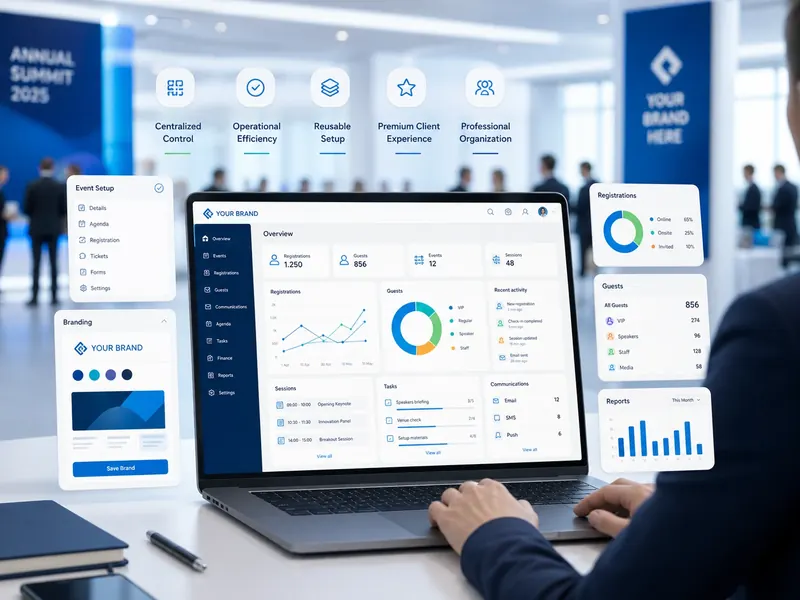
The event secretariat benefits too, with access to up-to-date dashboards and smart alerts for any logistical issue that arises during the day.
6. Showcasing and audience engagement
AI makes it possible to increase engagement through dynamic schedules, personalised real-time interactions, augmented reality, and gamification. Some events are beginning to experiment with personalised digital avatars to welcome and guide guests through the experience.
7. Post-event feedback analysis and continuous improvement
After the event, artificial intelligence can process written feedback through sentiment analysis, personalised questionnaires, and online reviews. This enables a continuous improvement process, identifying areas to optimise for the next edition. Integrating AI with a CRM also makes it possible to link feedback to individual attendee profiles, for a more precise reading over time.
8. Frequently asked questions
Does AI make creative and events teams redundant?
No: artificial intelligence doesn't replace human creativity, it amplifies it. In event management, from promotion to follow-up, it represents a competitive advantage that speeds up repetitive processes, leaving more time for strategic and creative decisions.
Where should I start if I've never used AI for my events?
Start with the phase that involves the heaviest manual workload: typically answering attendees' frequently asked questions (chatbot) or segmenting lists for personalised outreach. These are low-risk applications, easy to measure, that give you a concrete sense of the value before extending AI to other stages.
Do I need a large budget to start using AI for events?
No: many event secretariat and guest management platforms already include AI features (chatbots, segmentation, content suggestions) within the standard subscription, with no need to develop custom solutions.
Bring artificial intelligence to your events
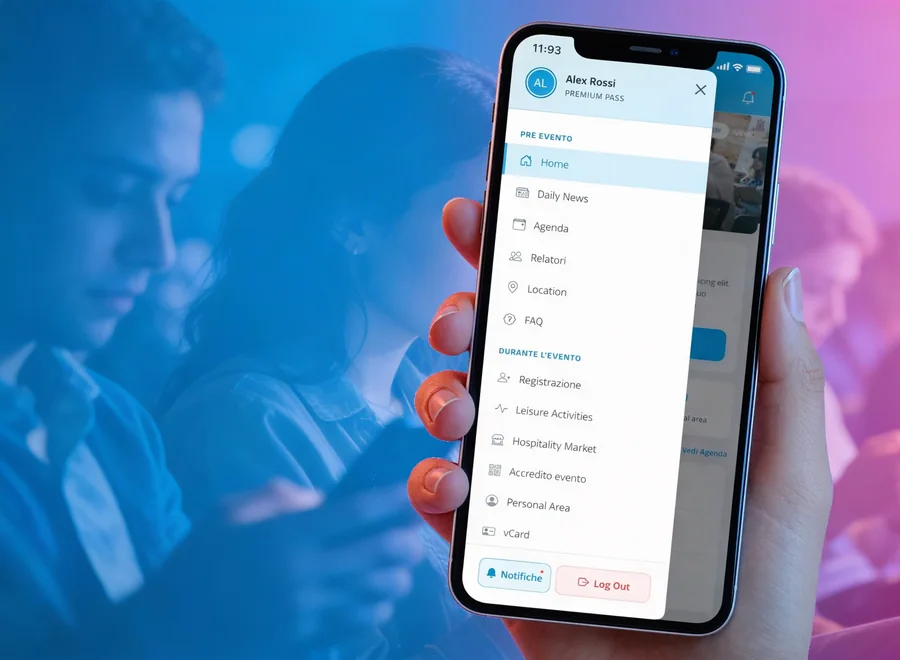
Discover webRay for AI-chatbot-powered event secretariat, and eventMe for a personalised attendee experience, from networking to tailored sessions.
Discover our platforms