Italiano
Digital accreditation: a present-day necessity
An attendee's experience begins well before the actual program. That first physical touchpoint — entry, the registration process — significantly shapes the overall perception of the event. A slow, clunky process breeds frustration and an unprofessional image; fast, frictionless accreditation instead creates a positive impression from the very first moment.
Growing digitalization has turned automated accreditation systems from a nice-to-have into a genuine necessity, for:
- Speeding up entry: cutting wait times and smoothing the flow of people.
- Improving security: ensuring only authorized attendees can access the event.
- Optimizing data management: collecting accurate data in real time.
- Reducing environmental impact: eliminating paper use for badges and lists.
- Delivering a superior experience: showing professionalism and attention to detail from the first contact.
How QR code check-in works
The heart of digital QR code accreditation lies in its simplicity and automation. The process unfolds across three phases.
Phase 1: QR code generation
It all starts at registration. When an attendee signs up — through an online form, a dedicated platform or a direct invitation — the event management system automatically generates a unique, personalized QR code for that specific registration.
The QR code isn't a random image: encoded inside it are the attendee's essential data and registration details, such as first and last name, a unique registration ID, ticket or access type (VIP, standard, press), booked sessions and any additional information (dietary preferences, company affiliation). Once generated, the code is sent to the attendee — typically by email, as part of a digital ticket — or made available inside a dedicated event web app.
Phase 2: scanning at entry
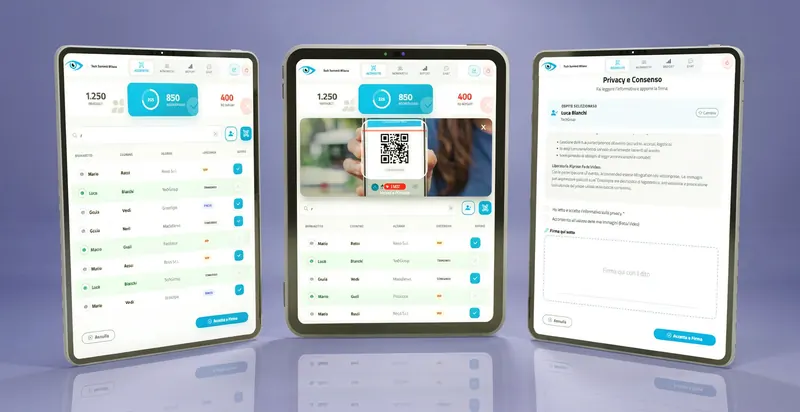
On arrival, the attendee shows their QR code — on a smartphone or tablet screen, or printed. Check-in staff use a scanning device (often just a smartphone or tablet with a dedicated app) to read the code.
The scan is nearly instant: the device reads the encoded data and sends it to the central database. The system compares the QR code's data against the registration record and, within milliseconds, verifies the code's authenticity, the ticket's validity, and the attendee's access permissions. If verification succeeds, a confirmation appears on the scanner and the attendee is let in; if there's an issue (an already-used or invalid code), an error message lets staff step in immediately. At the same time, the attendee's status flips from "Registered" to "Present," giving organizers a real-time view of turnout.
Phase 3: post-check-in and monitoring
After scanning, the process can continue with printing a physical badge, if required, through printers connected to the system that generate personalized badges with the attendee's details. The system keeps tracking entries, feeding valuable data for post-event analysis.
The advantages of QR code accreditation
Implementing a QR code accreditation system delivers a range of concrete benefits for efficiency, security and the overall event experience.
- Speed and shorter queues: a QR code scans in seconds, drastically cutting wait times and keeping a steady flow of attendees — for events with thousands of people, that means hours saved and a better first impression.
- Stronger security and access control: every QR code is unique and tied to a single registration, making fraud nearly impossible; the system instantly flags duplicate or invalid codes and supports differentiated access permissions (VIP, press, staff).
- Accurate, real-time data: every scan logs who entered, when and where, giving organizers live turnout statistics to better manage resources and make informed decisions during the event.
- A better attendee experience: no queues, a system perceived as professional, and the convenience of having your "ticket" on your phone from the very first moment.
- Environmental sustainability: eliminating paper tickets and registration forms cuts paper use and the event's environmental footprint.
- Lower operating costs: less staff needed for manual check-in, lower printing costs, fewer errors to fix.
- Flexibility and scalability: QR-code-based systems work for events of every size, from small meetings to major trade shows, and scale easily as attendee numbers grow.
According to Eventbrite's 2024 event statistics report, the QR code is the most widely used technology among organizers for check-in, adopted by 41% of operators — more common even than dedicated on-site Wi-Fi, confirming just how much it has become the industry's operational standard.
goAhead+: key features for flawless accreditation
Among access management solutions, I.T.S. Planet's goAhead+ is built specifically to optimize the accreditation process, with a feature set that goes well beyond simple scanning.
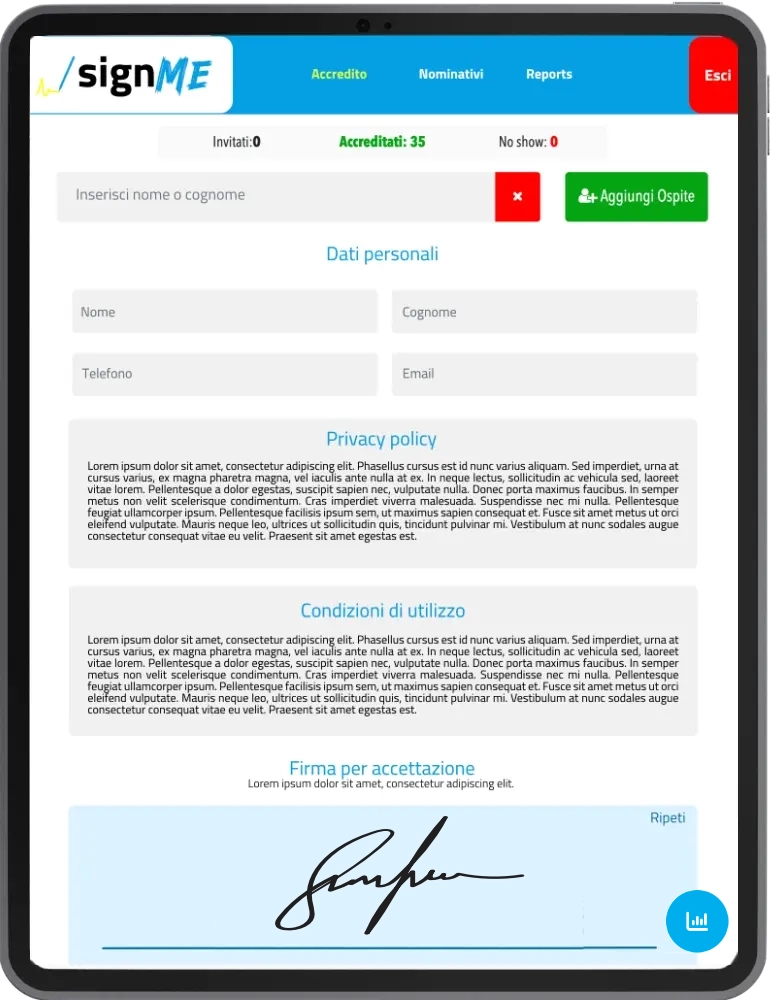
The platform also integrates with automatic badge printing right after check-in, and is built with GDPR compliance in mind for secure, transparent handling of attendee data.
A practical example: the corporate event with goAhead+
Picture a company running a major annual event for clients and partners. With goAhead+, the process unfolds like this:
- Online registrationAttendees sign up through a customized form and receive their unique QR code by email.
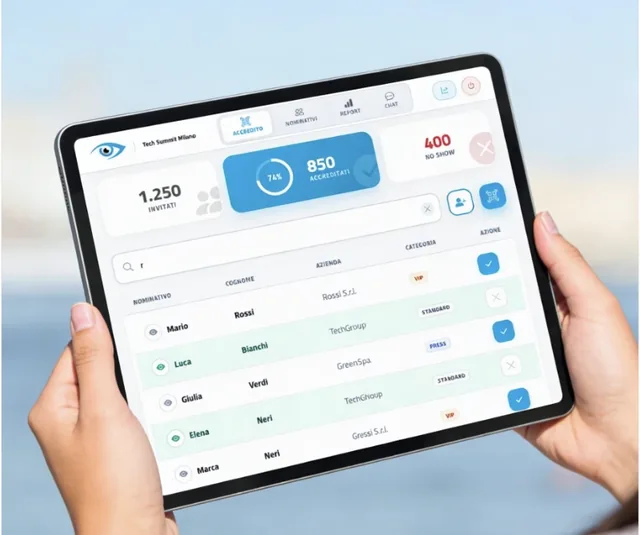
- Arrival and check-inAt the entrance they show the QR code from their smartphone; staff, with a tablet running the goAhead+ app, scan the code in under two seconds.
- A personalized welcomeThe tablet displays the attendee's name and, if their status calls for it, a VIP badge is printed.
- Real-time monitoringFrom the back office, organizers see how many guests have entered, through which gates, and which areas are getting crowded, so they can step in proactively.
- Data for next timeOnce the event wraps up, detailed reports on turnout, wait times and attendee demographics are ready to analyze what worked and plan the next edition.
This scenario shows how goAhead+ turns a potential point of friction — entry — into a smooth, professional experience, lifting the event's overall image.
Challenges and security considerations
Digital QR code accreditation offers real advantages, but it's worth weighing a few operational challenges and security considerations.
- Internet connection: many apps offer an offline mode, but a stable connection remains ideal for real-time syncing — having a backup plan, like a mobile hotspot, helps.
- Device battery: attendees need enough charge to display their QR code; offering charging points at the entrance is a nice touch.
- Digital divide: not everyone is comfortable with technology — a small support desk for anyone who needs help or a printed badge solves the problem.
- Data encryption: the data encoded in the QR code, and the communications between scanner and database, need to be encrypted to protect attendees' personal information.
- Unique codes and expiry: every QR code should be generated uniquely per attendee and ticket, ideally invalidated after first use, to prevent duplication and fraudulent sharing.
- Device protection and backups: scanning devices should be password-protected, and registration and check-in data should be backed up regularly.
Choosing a reliable platform like goAhead+, which integrates robust security protocols and GDPR compliance, is essential to mitigate these risks and ensure secure, efficient accreditation. If you're also weighing tick-based digital accreditation, our guide on event check-in: manual tick or QR code? compares the two approaches. And if you already have an attendee list but no QR code generation system, our guide on QR code check-in: how to use it with just a list walks through the path forward.
The future of accreditation, beyond the QR code
While the QR code remains the dominant technology for digital accreditation, the future promises further evolution: technologies like NFC (Near Field Communication), facial recognition (with appropriate privacy safeguards) and blockchain-based solutions could further improve the speed and security of the process. The goal stays the same: making event entry a frictionless, efficient and memorable experience.
Investing in a state-of-the-art QR code check-in system isn't just a logistical upgrade — it's a strategic step toward successful events that leave a positive mark on attendees.
Frequently asked questions
How is the accreditation QR code generated?
What happens if a QR code is copied or duplicated?
Do you need a stable internet connection for QR code check-in?
Is the QR code secure for attendees' personal data?
Can goAhead+ handle events with multiple entry points at once?
Ready to transform your event's entry experience?
goAhead+ generates, scans and monitors your attendees' accreditation in real time, with the security and scalability a professional event demands.
Discover goAhead+